Correcting the protruding part of the nasal bridge and designing a refined look
Rhinoplasty that does not take into account each person's different skin thickness, bone structure, and face shape tends to leave an artificial look, such as an excessively high or thin nasal tip, and is more likely to lead to revision surgery. Face Plus Plastic Surgery's rhinoplasty is a surgical approach that considers both the function and shape of the nose through anatomical analysis inside the nose + balance with the face shape + use of autologous tissue. We design the nasal bridge and nasal tip line in harmony with the overall face shape and facial features.
Design Based on Anatomical Analysis with 3D-CT and Facial Balance
Face Plus rhinoplasty, beautiful inside and out, considers both function and shape using autologous tissue. The surgical method differs depending on the type of nose, such as nasal tip surgery · low nasal bridge · bulbous nasal tip · deviated nose · short nose · drooping nasal tip · hump nose.
02
Hump Nose Surgery
A nose called a hump nose because the curved shape of the nasal bridge, seen from the side, resembles a hawk's beak. We correct the protruding part of the nasal bridge, which can make a person's impression look stern and stubborn, and design a refined look.
03
Hump Nose Surgery Methods
01
When the nasal bridge protrusion is not severe
When the nasal bridge is high and only one part protrudes, correction is possible just by grinding down the protruding area. When the nasal bridge is low, after the protruding area is ground down, an implant can be used to raise the nasal bridge.
02
When the nasal bridge protrusion is severe
When the nasal bridge protrusion is severe, the protruding area—that is, the dorsal nasal bone and the upper lateral cartilage and septal cartilage that rise upward where the nasal bone and cartilage meet—is completely removed. Afterwards, to close the opened nasal bone and cartilage, both nasal bones are brought together for correction.
When the nasal bridge is low, it may look even lower after hump correction, so an implant can be added to match the height.
04
FacePlus Hump Nose Surgery Is Recommended for These People
If you want to raise the nasal bridge without a hump
If you have a severely deviated septum
If a protruding nasal bridge makes your impression look strong
If the nasal bridge protrudes due to acquired trauma
05
In Rhinoplasty, the Medical Team's Aesthetic Sense Matters as Much as Surgical Technique
A medical team with long surgical experience and an accumulation of data from diverse rhinoplasty cases designs the most ideal nasal bridge and nasal tip line in consideration of facial balance
Surgery performed by a dedicated medical team with aesthetic sense
Golden-ratio design that considers facial balance
Custom implants made to suit your skin and skeletal structure
Bruising and swelling management for faster recovery
06
Face Plus Talk
Septal Cartilage, Ear Cartilage, Autologous Rib Cartilage — Which Autologous Cartilage Is Good for Nasal Tip Surgery?
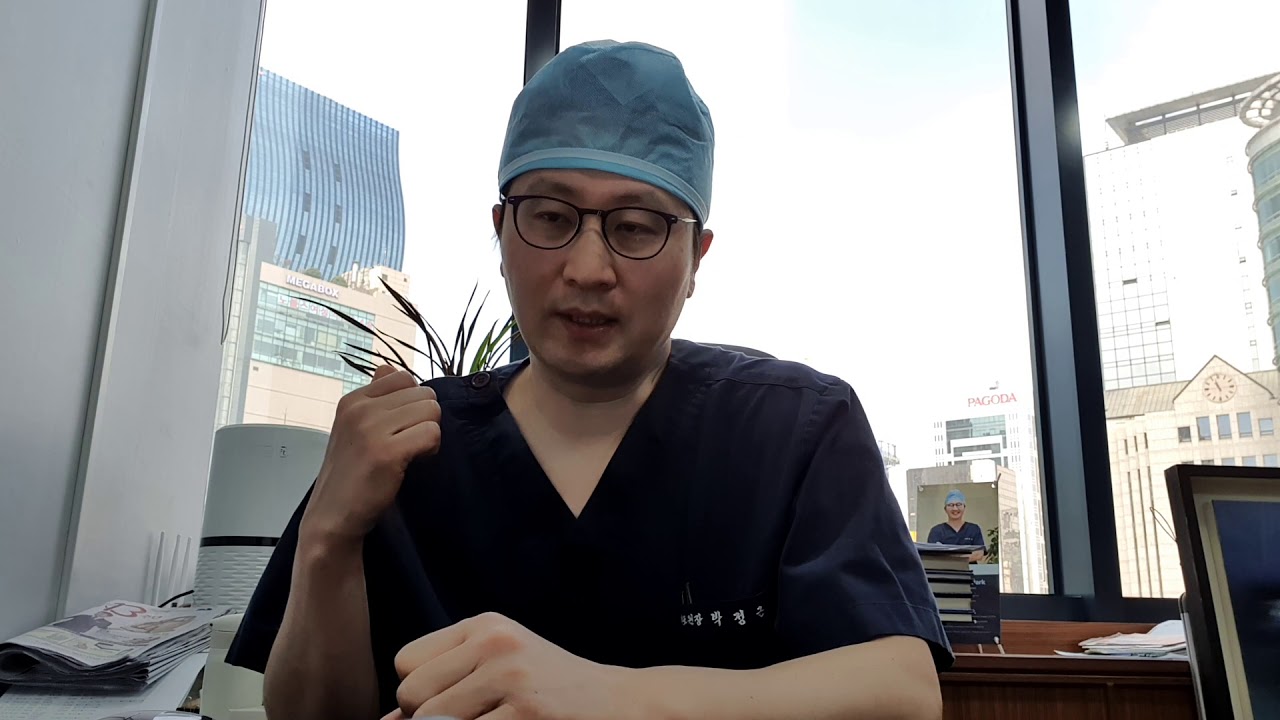
— Dr. Park Jung Keun, Plastic Surgery Specialist · Face Plus Talk
Rhinoplasty is broadly divided into nasal bridge surgery and nasal tip surgery. The two cannot be called separate, but the materials used for the two areas are very different. Generally, implants such as silicone are used for the nasal bridge, and autologous cartilage is used for nasal tip surgery. I will tell you about the three representative types of autologous cartilage.
First, the one most people know is ear cartilage. Ear cartilage can be harvested through an incision in front of or behind the ear. I usually harvest cartilage from behind the ear. I usually compare ear cartilage and septal cartilage in terms of whether it is thick, how strong it is, how much can be obtained, and so on. But it is hard to speak about this uniformly. This is because the amount of cartilage differs a lot from person to person and from site to site, and strength and thickness also differ greatly.
Second is the septal cartilage inside the nose. The septal cartilage is located inside the nose, in the middle of the nostril interior, and is a structure that divides the two sides. In fact, it is a structure that is not much needed, so if some supporting portion is left, removing it causes no problem at all. Septal cartilage is originally plentiful and thick, so it is a material widely used in recent rhinoplasty. Unlike ear cartilage, septal cartilage is flat and wide, so it is effective for making structures like support pieces.
Third is autologous rib cartilage. Autologous rib cartilage is the cartilage attached to the ribs, and it is the most abundant in both quantity and thickness. However, it must be harvested through an incision in the chest area, and other systemic risks also increase, so it is used as a last resort whenever possible. An incision of about 3-5 cm is made in the chest area, and the cartilage is sufficient in size and very thick.
Then which cartilage is the best material? There are the general characteristics of each cartilage described above, but in practice there are quite a lot of exceptions. It is important to know enough about the autologous cartilage used in rhinoplasty, but I would like to say that the choice of cartilage is not necessarily tied to the surgical result. What matters is flexibly using sufficient tissue.
There is no single correct answer for a surgical method. After a thorough consultation, we proceed with a surgical method tailored to each individual. Online Consultation
07
FacePlus TV — Related Videos
Which Nose Shaping Surgery Is Right for Me? / Nasal Tip Cartilage Tying / Cartilage Grafting / Alar Reduction / Nasal Tip SurgeryWhat If I Don't Actually Have a Hump Nose?! / Hump Nose / Nasal Tip Surgery /A Short Nose Case Where the Nostrils Show! Nasal Tip Lengthening Instead of Nostril Lowering?
1 / 3
This links to a video on the Face Plus Plastic Surgery YouTube channel. View All FacePlus TV
08
Precautions
Results of procedures may differ from person to person. They may differ depending on the patient's condition and the surgical method.
The content of this page is general medical information under the Medical Service Act, and the effects and recovery times of surgeries and procedures may differ from person to person. All surgeries and procedures can cause side effects, so please decide only after a thorough consultation with a plastic surgery specialist.
Dr. Park Jung Keun · Plastic Surgery Specialist, PhD in Medicine
He personally consults on and performs facial aging treatments such as facelift, droopy eyelid surgery, and thread lift. The doctor personally sees you from consultation through recovery.
2004 Plastic Surgery Specialist2013 PhD in Medicine, Seoul National UniversityVice President, Korean Association of Plastic Surgeons
We begin by looking together, through thorough consultation, at whether surgery is needed
Facelift, droopy eyelid surgery, and thread lift: Dr. Park Jung Keun personally checks every stage, from consultation to recovery. Please schedule by phone or KakaoTalk, or leave a consultation request form.


 한국어
 English
 简体中文
 繁體中文
 日本語
 Монгол
 Русский
 ไทย
 Indonesia
 Tiếng Việt
 العربية