Fat grafting is surgery in which your own fat, harvested from areas such as the abdomen or thighs, is purified and transferred to sunken areas of the face.
Fat grafting is surgery in which surplus fat from the body is harvested through a thin tube, filtered of impurities, and then injected in small portions through a thin tube into sunken areas of the face.
In a word, it is surgery that moves fat from your own body to where it is needed.
Because it is your own tissue, no artificial material is placed in the body. In exchange, the transferred fat has to survive in its new location. In medical terms this is called engraftment (the transferred tissue settling in and surviving).
One part of facial aging is loss of volume. With age, the fat in the forehead, temples, and front of the cheeks decreases, creating shadows and a sunken look.
Why does facial volume decrease?
As we age, aging progresses starting from deep within the skin. Commonly, from the late twenties, facial fat is lost, the forehead flattens, nasolabial folds deepen, and the cheeks hollow, making a person look older.
Face Plus volume fat grafting is a method in which fat is harvested from areas with excess fat such as the thighs or abdomen, only the pure fine fat is selected, and it is grafted into deeply sunken areas to fill in volume. What matters in fat grafting is that natural volume is maintained for a long time.
Face PlusSafe, Natural Volume Filling with Your Own Fat
Face Plus Volume Fat Grafting A natural volume line created by injecting pure fat in evenly divided portions
Pure autologous fat grafting know-how
Injected as evenly as possible so that it does not clump in one place
Three-dimensional design that takes the facial contours into account
Face PlusAreas where Face Plus volume fat grafting is applied
Facial fat that is lost with age! Creating a youthful look with natural volume
Areas that need volume: forehead · temples · front cheekbone area · cheeks · nasolabial folds · chin, and others
02
When is fat grafting done?
It is done when the face looks sunken, shadowed, or older, and the main cause is lost volume rather than sagging.
"Have I lost weight, or has it sagged?" If you are unsure in front of the mirror, start here.
A sunken face and a sagging face are different problems. Simply filling sagging tissue can make the face look heavy. We first look at which is the main cause.
Type
Subjects
Whole-face fat grafting
When several areas, such as the forehead, temples, front of the cheeks, and the area around the nasolabial folds, are sunken together
Fat grafting by area
When only one or two areas are sunken
Forehead fat grafting
When the forehead is flat or sunken so that an uneven contour shows in the side view
Face PlusVolume Fat Grafting Is Recommended for People Like These
If you have little facial fat and want more volume
If your cheeks are especially sunken and make you look older
If your face looks flat overall
If you are afraid of the side effects of implants and fillers
If you have deep nasolabial folds and midcheek grooves (lines running diagonally down the cheek)
If you want to visually correct a protruding mouth
03
How does the transferred fat settle in?
Transferred fat survives only when new blood vessels grow in from the surroundings and supply it with blood; the parts that do not get this are absorbed.
That is why a large amount is not placed in one spot. It is placed in small amounts, in several layers and several directions, through a thin tube.
A Word from the Doctor
"The graft take rate matters, but a good result can only be obtained by injecting the right amount into the areas that truly need it."
At first, grafted fat tissue is not connected to blood vessels, so it survives on nutrients seeping in from the surrounding tissue, and it takes hold once new blood vessels grow in (revascularization, the formation of new blood vessels). In an animal experiment, only some of the fat cells located about 0.3 mm inside from the edge of the graft survived, and deeper than that the fat cells died and were either replaced by new cells or remained as necrosis (tissue death). For this reason, a method is used in which the fat is injected little by little as the thin tube is withdrawn, divided among several tunnels.
In plain terms — Transferred fat survives only when new blood vessels connect to it. If it is placed in one lump, the center does not receive blood and dies. That is why it is placed in thin strands like noodles, divided into many tracts.
Most of the dead fat is absorbed, but some can remain as an oil pocket or a hard lump. This is explained again in the side effects section.
04
Can it be done together with a facelift?
Yes. A facelift and fat grafting are often done together.
While a facelift lifts the sagging tissue, fat grafting is done at the same time if there are also sunken areas. Sagging is addressed with surgery that pulls up, and sinking with surgery that fills. Many faces have a mixture of both.
A Word from the Doctor
"… It is truly important to restore volume at the same time as pulling the face up with lifting."
When combined with a facelift, you need to stop smoking for 3 to 4 weeks before surgery. Anesthesia, scars, recovery, and side effects of the facelift are explained in the facelift information.
05
How is fat grafting surgery done?
The sites for harvesting and injecting fat are marked, anesthesia is given, and the fat is harvested, purified, and injected in divided portions into the face.
Since it may feel vague the first time, we have laid it out step by step.
1. Consultation and design
We look at where and how much is sunken and decide on the areas and amounts to inject. The area from which fat is harvested is also decided at this time.
2. Anesthesia
3. Harvesting the fat
A small hole is made and fat is harvested with a thin tube (cannula).
4. Purifying the fat
Blood, anesthetic fluid, and oil are filtered out of the harvested fat, and only the living fat tissue is collected.
5. Injecting it into the face in divided portions
Small amounts are placed in several layers with a thin tube with a blunt tip.
Face PlusVolume Fat Grafting Procedure
01Custom design consultation tailored to the patient's facial contour characteristics and skin condition02Fat is harvested from the thighs, buttocks, abdomen, and other areas03Pure fat is separated using a centrifuge04Fat is injected into the designed areas
06
What should be watched for in forehead and temple fat grafting?
The forehead, glabella, and temples are places where blood vessels connected to the vessels going to the eyes and brain pass, so the layer and amount are placed with particular care.
The forehead skin is thin, so if the injected fat is uneven, the bumpiness can show through. The amount is decided by looking at the contours of the middle and both sides of the forehead.
07
How long does recovery from fat grafting take?
Swelling and bruising mostly subside within about 1 to 2 weeks, and the volume of the transferred fat decreases most during the first month, after which the change becomes smaller by 3 to 6 months.
If you have work or an important appointment coming up, this is probably what you most want to know. We have written it by time point.
Time point
Course
First few days
Swelling and bruising are greatest in the face and at the site where fat was harvested
1–2 weeks
Much of the swelling and bruising subsides
First 1 month
This is the period when the fat that will be absorbed decreases the most[5]
About 3 to 6 months
Volume change becomes smaller and settles. It can still decrease slightly for up to 1 year afterward[5]
Right after surgery, swelling makes it look larger than the amount that was placed. This is not the final result. There is no need to be too alarmed when you look in the mirror.
So that you do not have to endure recovery alone, the doctor and the nursing team check your swelling, pain, and condition together. The third of our treatment principles is “We see patients more frequently after surgery.”
Precautions after surgery
It is best to avoid rubbing or pressing the area where fat was placed.
It is best to avoid sleeping face down.
We will advise you at the consultation about when to resume saunas, strenuous exercise, and alcohol.
Do not wait in these cases
If something feels wrong after surgery, do not put up with it on your own.
When your vision suddenly worsens, becomes blurred, or your eye hurts
When your speech becomes slurred, or one side of your face, arm, or leg goes numb or weak
When a sudden severe headache occurs, you become confused, your eyelid droops, or you see double
When the skin at the injection site turns pale, develops a purple net-like pattern, or the pain gradually worsens
When the injection site or the harvest site becomes red and swollen, feels hot, or discharges pus
When a hard lump can still be felt
When differences between the left and right sides or bumpiness remain unchanged after several months
These symptoms usually appear during or right after the injection, but cases have also been reported in which they appeared several hours later[4].
For vision changes, severe headache, confusion, or abnormal speech or limb function, do not wait; call 119 immediately. If skin color changes or pain becomes severe outside clinic hours, go to the nearest emergency room.
The clinic is located on the 4th floor of Vorati Al Building, 480 Gangnam-daero, Gangnam-gu, Seoul. It is a 1-minute walk from Exit 3 of Sinnonhyeon Station.
At the consultation, please tell us about any fillers, threads, or fat grafting you have previously had in your face, the medications you take, whether you smoke, and any plans for weight change.
09
Face Plus Talk
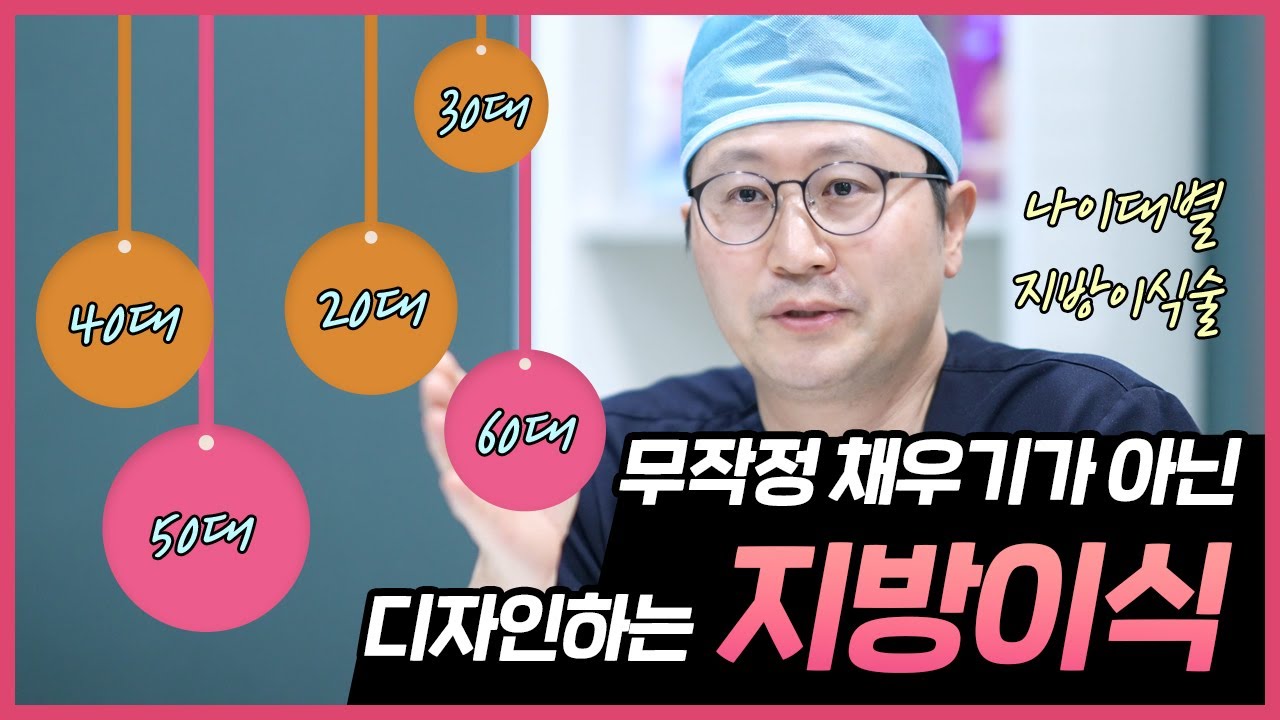
Fat grafting is not simply an operation that fills. Fat grafting is facial contouring surgery.
— Dr. Park Jung Keun, Plastic Surgery Specialist · Face Plus Talk
As a doctor who mainly performs facial plastic surgery, I naturally get many inquiries about facial contours. In particular, the consultation most often sought to correct facial contours is, naturally, for facial contouring surgery. That is bone surgery. Literally, facial contouring surgery makes the contour of the whole face smoother and smaller. In practice, it is an operation that makes the face smaller in size.
However, wanting to have facial contouring surgery and actually having it are very different things. In most cases, people want to find a method other than facial contouring surgery. An operation often done together with facial contouring surgery is fat grafting.
One thing ordinary people mistake is thinking that fat grafting is an operation that fills areas that are sunken or hollowed. They think that filling a hollow with fat tissue or filler will make it smooth. Of course, there are cases in which surgery is done for that kind of correction. It truly fills sunken areas.
However, fat grafting is also widely used when surgery is done for the overall facial contour. That is, in a facial contour consultation, rather than simply bone surgery, surgery is carried out that uses fat grafting to make the whole face look smoother and smaller. So rather than an operation that simply fills sunken areas, a more accurate expression would be facial fat contouring surgery, which makes a face that looks large and dated look more polished and pretty.
Every time I perform fat grafting, I always operate thinking of it as facial contouring surgery. So I sometimes recommend fat injection in unexpected areas that patients had not thought of. Fat grafting is not simply an operation that fills. Fat grafting is facial contouring surgery.
There is no single correct answer for a surgical method. After a thorough consultation, we proceed with a surgical method tailored to each individual. Online Consultation
10
Frequently Asked Questions
What side effects can occur with fat grafting?
Besides swelling and bruising, the transferred fat may be absorbed more than expected, clump and harden (calcification), or the two sides may become different. Rarely, if fat enters a blood vessel and blocks it, vision can be lost, a cerebral infarction can occur, or the skin can undergo necrosis.
Because this is something you must know before deciding on surgery, we have written it out in full without shortening it. Please decide after fully understanding the items below.
Item by item
Side Effects
Variation in graft take rate and absorption: How much of the transferred fat remains differs by person, area, and the methods of harvesting, purification, and injection. If more than expected is absorbed, additional grafting may be needed[2][6].
Clumping and nodules (palpable lumps): Fat gathered in one place may be felt or seen as a lump.
Fat necrosis, oil cysts, and calcification: Fat that does not survive can become an oil pocket (oil cyst), or harden and accumulate calcium (calcification). If needed, a procedure to drain it is done.
Bumpiness, asymmetry, and overcorrection: The injected area may be uneven, the two sides may differ, or too much may remain. In a small study that followed people who had fat transferred to the face for 5 years, the increase in facial volume was related to weight gain rather than to the amount injected[7].
Embolism from intravascular injection (blockage of a blood vessel): If fat enters a blood vessel, it can block it and cause skin necrosis (death of part of the skin), vision damage or blindness, and, rarely, cerebral infarction; cases of death have also been reported[4][8]. Unlike filler, there is no medication that dissolves fat.
Infection: The injection site or the harvest site may become red and swollen, with heat and pus.
Problems at the harvest site: Bruising, bumpiness, and reduced sensation can occur.
In plain terms — There is one thing to remember first. Injected fat blocking a blood vessel is rare, but it is a serious problem, such as loss of vision or death of the skin, and needs treatment right away.
Other things that can happen are as follows.
The transferred fat may remain in a smaller amount than expected.
It can clump or harden.
These problems show up over time, and in some cases are corrected with additional grafting or removal.
Fat that has settled remains as your own tissue, but how much will remain cannot be promised in advance.
"How much of the injected fat remains?" This is the question that must be answered most honestly.
Even after the fat has settled, the face continues to age, and if your weight changes, the volume of the transferred fat changes as well.
How does fat grafting differ from filler?
Fat grafting is surgery in which your own fat is harvested and transferred, while filler is a procedure in which a product is injected. Hyaluronic acid filler can be dissolved with an enzyme that dissolves it, but there is no medication that dissolves fat.
How much of the transferred fat remains?
Some is absorbed, and how much remains differs by person, area, and method. We cannot promise in advance what percentage will remain. For the fat that remains, volume change becomes smaller after about 3 to 6 months.
Is fat grafting done in a single session?
A single session is enough in some cases, and in others an additional graft is done to make up for what has been absorbed. This is decided after the fat has settled.
Can a facelift and fat grafting be done together?
Yes. A facelift and fat grafting are often done together. If there are also sunken areas, fat grafting is done at the same time. In this case, you need to stop smoking for 3 to 4 weeks before surgery.
11
Related FacePlus TV videos
What Is Fat Grafting? Why People of Different Ages Have ItHow Long Fat Grafting Lasts | Short? Long? This Is the Answer!Face Plus Plastic Surgery_Dr. Park Jung Keun_Fat Grafting
1 / 3
This links to a video on the Face Plus Plastic Surgery YouTube channel. View All FacePlus TV
12
Surgeries and procedures worth considering together
These are surgeries and procedures often discussed together with this surgery during consultations. Whether to have them together is decided after an examination.
Eto H, Kato H, Suga H, Aoi N, Doi K, Kuno S, Yoshimura K. The fate of adipocytes after nonvascularized fat grafting: evidence of early death and replacement of adipocytes. Plast Reconstr Surg. 2012;129(5):1081-1092. PMID 22261562. doi:10.1097/PRS.0b013e31824a2b19
Strong AL, Cederna PS, Rubin JP, Coleman SR, Levi B. The Current State of Fat Grafting: A Review of Harvesting, Processing, and Injection Techniques. Plast Reconstr Surg. 2015;136(4):897-912. PMID 26086386. PMCID PMC4833505. doi:10.1097/PRS.0000000000001590
Beleznay K, Carruthers JD, Humphrey S, Jones D. Avoiding and Treating Blindness From Fillers: A Review of the World Literature. Dermatol Surg. 2015;41(10):1097-1117. PMID 26356847. doi:10.1097/DSS.0000000000000486
Moellhoff N, Kuhlmann C, Frank K, Kim BS, Conte F, Cotofana S, Piccolo NS, Pallua N. Arterial Embolism After Facial Fat Grafting: A Systematic Literature Review. Aesthetic Plast Surg. 2023;47(6):2771-2787. PMID 37563433. PMCID PMC10784353. doi:10.1007/s00266-023-03511-y
Wu R, Yang X, Jin X, Lu H, Jia Z, Li B, Jiang H, Qi Z. Three-dimensional Volumetric Analysis of 3 Fat-Processing Techniques for Facial Fat Grafting: A Randomized Clinical Trial. JAMA Facial Plast Surg. 2018;20(3):222-229. PMID 29327032. PMCID PMC5876908. doi:10.1001/jamafacial.2017.2002
Lv Q, Li X, Qi Y, Gu Y, Liu Z, Ma GE. Volume Retention After Facial Fat Grafting and Relevant Factors: A Systematic Review and Meta-analysis. Aesthetic Plast Surg. 2021;45(2):506-520. PMID 31940073. doi:10.1007/s00266-020-01612-6
Schipper JAM, Tuin AJ, Loonen TGJ, Dijkstra PU, Spijkervet FKL, Schepers RH, Jansma J. Volume and patient satisfaction, 5 years of follow up after facial fat grafting. J Plast Reconstr Aesthet Surg. 2025;102:231-237. PMID 39938464. doi:10.1016/j.bjps.2025.01.052
Park KH, Kim YK, Woo SJ, Kang SW, Lee WK, Choi KS, Kwak HW, Yoon IH, Huh K, Kim JW; Korean Retina Society. Iatrogenic occlusion of the ophthalmic artery after cosmetic facial filler injections: a national survey by the Korean Retina Society. JAMA Ophthalmol. 2014;132(6):714-723. PMID 24676334. doi:10.1001/jamaophthalmol.2013.8204
Wong J, Lam DP, Abrishami A, Chan MT, Chung F. Short-term preoperative smoking cessation and postoperative complications: a systematic review and meta-analysis. Can J Anaesth. 2012;59(3):268-79. PMID 22187226. doi:10.1007/s12630-011-9652-x
Mills E, Eyawo O, Lockhart I, Kelly S, Wu P, Ebbert JO. Smoking cessation reduces postoperative complications: a systematic review and meta-analysis. Am J Med. 2011;124(2):144-154.e8. PMID 21295194. doi:10.1016/j.amjmed.2010.09.013
Dr. Park Jung Keun · Plastic Surgery Specialist, PhD in Medicine
He personally consults on and performs facial aging treatments such as facelift, droopy eyelid surgery, and thread lift. The doctor personally sees you from consultation through recovery.
2004 Plastic Surgery Specialist2013 PhD in Medicine, Seoul National UniversityVice President, Korean Association of Plastic Surgeons
The content of this page is general medical information provided in accordance with the Medical Service Act, and the effects and recovery time of surgeries and procedures may vary by individual. All surgeries and procedures can cause side effects, so please make your decision only after a thorough consultation with a plastic surgery specialist.
Consultation & Booking
We begin by looking together, through thorough consultation, at whether surgery is needed
Facelift, droopy eyelid surgery, and thread lift: Dr. Park Jung Keun personally checks every stage, from consultation to recovery. Please schedule by phone or KakaoTalk, or leave a consultation request form.


 한국어
 English
 简体中文
 繁體中文
 日本語
 Монгол
 Русский
 ไทย
 Indonesia
 Tiếng Việt
 العربية



 Filler
 Facial Contouring
 Thread Lift
