If you opened this page because the outer corners of your eyes droop and make your expression look heavy, we will start by showing you the basic information.
Although the name includes "lift," it is not a surgery that pulls the eyebrows up. It is a surgery that cuts away excess skin below the eyebrow.
This is a surgery in which an incision is made along the border below the eyebrow and the upper eyelid skin that hangs below it is cut away.
Because the name makes this surgery easy to confuse, we will go step by step, starting with the principle.
With age, the upper eyelid skin stretches. The stretched skin tends to cover the eye, especially toward the outer corner.
Under-brow incision removes this excess skin from the eyebrow side. It does not touch the double eyelid line (eyelid crease). In the medical literature, it is called infrabrow excision or subbrow blepharoplasty.
Mechanism
Under-brow incision (infrabrow excision blepharoplasty) places the incision line along the border below the eyebrow, excises the lax upper eyelid skin below it and, if needed, part of the orbicularis oculi (the muscle around the eye), and then sutures. This surgery reduces the thick skin near the eyebrow and leaves the thin skin near the lashes and the existing eyelid crease as they are. Case studies of East Asian patients applied this method to cases where the outer corner of the eye is covered, where the patient wishes to keep the current double eyelid line, or where there is an eyebrow tattoo[1][2]. Upper eyelid skin becomes thicker toward the eyebrow[3].
In simple terms — This is a surgery that cuts away excess skin just below the eyebrow.
It removes the thick skin near the eyebrow.
The double eyelid line side is not touched.
It is not a surgery that raises the height of the eyebrow.
Sub-brow lift is a method in which an incision is made below the eyebrow and the sagging eyelid is pulled up, and it suits cases where the space between the eye and the eyebrow is wide. Like upper blepharoplasty, it cuts away sagging eyelid skin, but because it does not create a new double eyelid, the change in appearance is not large and the recovery period tends to be shorter.
Face PlusFace Plus Plastic Surgery's midlife eye surgery addresses the underlying cause
The plastic surgery specialist who performs the surgery personally handles everything from consultation to operation
Addressing aesthetic and functional problems at the same time
Minimizing the amount of skin removed
Improving wrinkles caused by weak eye-opening strength
Natural anti-aging effect with no change in impression
Face PlusMiddle-Aged Eye Surgery CHECK — Thinking About Droopy Eyelid Surgery?
01
Upper Blepharoplasty
Creates a double eyelid while removing sagging skin
02
Sub-Brow Lift
Removes sagging skin without creating a separate double eyelid
In this way, the method differs depending on the shape you want and each person's condition. From the patient's side, deciding in advance whether you want a double eyelid you did not have before, or whether you do not want a change in your impression, makes the decision somewhat easier. After sagging eyelid skin is removed with middle-aged eye surgery, opening the eyes becomes much easier and the impression looks much brighter.
02
When is under-brow incision done?
It is considered when upper eyelid skin covers the eye, mainly toward the outer corner.
Read the list below while picturing your own eyes in the mirror. If any apply to you, we will check at the consultation whether under-brow incision is right for you.
When your eyes feel uncomfortable
Your field of vision is blocked at the outer corner
Your forehead strains when you open your eyes
Skin at the outer corner overlaps and becomes sore
When you are concerned about how your eyes look
Your outer eye corners look droopy and your expression looks heavy
Your upper eyelids look thick
You do not want to change the shape of your current double eyelid line
Face PlusSub-brow lift is recommended for people like these
Severe eyelid drooping due to aging
Drooping eyelids that block your field of vision
You do not want a double eyelid
You want to minimize the incision scar and recover quickly
When you want aesthetic and functional improvement at the same time
03
How is it different from upper blepharoplasty and ptosis correction?
The surgery differs depending on where skin remains and on eye-opening strength. Skin at the outer corner calls for under-brow incision, skin all the way to the nose side calls for upper blepharoplasty, and weak eye-opening strength calls for ptosis correction.
The three surgeries work on similar areas and are easy to confuse. We have sorted them by eye condition in the table.
Eye condition
Suitable surgery
Incision site
What the surgery does
Stretched upper eyelid skin mainly covers the outer corner of the eye. The eyelid skin tends to be thick
Under-brow incision (this page). Upper blepharoplasty is also possible
Border below the eyebrow
Excess skin close to the eyebrow is cut away
Stretched skin covers the entire eye, all the way to the inner corner near the nose
For skin-side incisional ptosis correction, the double eyelid line; for conjunctival-side non-incisional ptosis correction, the inside of the eyelid (conjunctiva)
The skin side pulls and fixes the tendon sheet of the stretched eye-opening muscle. The conjunctival side reduces the accessory muscle inside the eyelid (Müller's muscle)
The eyebrow itself has dropped considerably and presses on the eyelid
Surgery to raise the forehead or eyebrows is discussed together
—
—
Sometimes all three are present together. In that case, two of the surgeries may be done together.
"With the eyes in particular, the 'visible symptom' and the 'actual cause' are often different, so an accurate diagnosis is the most important."
04
How is under-brow incision performed?
The area to be removed is marked in a seated position, an incision is made below the eyebrow, excess skin is cut away, and the wound is stitched. Surgery takes about 1 hour.
Since it may feel vague the first time, we have laid it out step by step.
Step
Details
1. Design
The border below the eyebrow and the width to be removed are marked while seated
2. Anesthesia
Local anesthesia is usually used. Sedation can also be added if needed
3. Excision
An incision is made along the border below the eyebrow and excess skin is cut away
4. Suturing
The wound is stitched so that the scar lies along the eyebrow border
5. Going home
Face PlusSub-Brow Lift Surgical Method
01Customized design consultation tailored to the patient's eye shape, degree of skin sagging, and other conditions02Under-brow incision03Removal of sagging skin04Completing lively eyes after delicate suturing
05
Where does the under-brow incision scar remain?
The scar remains along the border below the eyebrow, where it meets the eyebrow hair. The scar does not disappear.
At first the incision line is red. The redness fades over several months.
06
How long does recovery from under-brow incision take?
The stitches are removed on day 7 after surgery, and bruising and swelling are worst in the first few days and then gradually subside. It takes several months for the scar to settle.
If you have work or an important appointment coming up, this is probably what you most want to know. We have written it by time point.
Time point
Status
Day of surgery to a few days
The area below the eyebrow and the upper eyelid may swell and bruise
Day 7
The skin stitches are removed
Most bruising and swelling subsides
Several months
The redness of the incision line fades
After 6 months
The scar settles. Whether revision surgery is needed is also decided after this point
Activity
Time point
Going to work
Washing your face
Eyebrow makeup
The speed of recovery differs from person to person. If you have an important event coming up, please tell us in advance at the consultation.
Precautions after surgery
High blood pressure, aspirin use before and after surgery, vomiting after surgery, and increased activity have been reported as common factors in patients who developed the complication of blood collecting after eyelid surgery[8]. For that reason, strenuous activity is avoided for several days after surgery.
Cold compresses, sleeping position, and when to resume exercise, alcohol, and saunas:
07
What are the side effects of under-brow incision?
Scars, loss of eyebrow hair, the eyebrow moving closer to the eye, a dull sensation in the forehead, differences between the left and right sides, and residual sagging can occur; rarely, blood collects or problems with vision arise.
This is information you need to know before deciding on surgery, so we have written it out in full without shortening it.
A visible scar: it may be more noticeable if you do not wear eyebrow makeup or if your eyebrows are faint
Loss of eyebrow hair on the scar side
The eyebrow dropping slightly so that the distance between the eyebrow and the eye looks shorter
A dulled sensation in the forehead or eyebrow area
Differences between the left and right sides
Residual sagging: in particular, sagging on the inner (nasal) side is not reduced by this surgery
Being unable to close the eyes completely when a large amount is removed (lagophthalmos)
Hematoma (a collection of blood), infection, and wound opening
Known complications of under-brow incision are listed as wound opening, hypertrophic scars (thick, raised scars), and damage to the supraorbital artery and nerve (the nerve responsible for sensation in the forehead)[3]. In one case series, some patients reported abnormal sensation around the eyebrow, which recovered after several months[7]. In contrast, another study of 64 operated patients reported no complications related to scarring or changes in sensation[1].
The narrowing of the distance between the eyebrow and the eye after surgery was observed on the outer side in all 63 patients[5]. A review (a paper that gathers and explains multiple studies) that organized the complications of eyelid plastic surgery in general by time period listed corneal abrasion (scratching of the surface of the cornea) and retro-orbital hemorrhage (blood collecting behind the eye), which can threaten vision, within 1 week after surgery, and differences between the left and right sides, scars, and prolonged swelling after 6 weeks[9]. This review covers eyelid plastic surgery in general and does not show the frequency for under-brow incision alone.
In plain terms — This is what is reported with under-brow incision.
Scar
Changes in sensation around the forehead and eyebrows: there are reports of recovery over several months.
A change in which the eyebrows appear to drop slightly
Across eyelid surgery as a whole, blood can rarely collect behind the eye and threaten vision.
Do not wait in these cases
If something feels wrong after surgery, do not put up with it on your own.
Bleeding behind the eye is reported to occur most often within 24 hours after surgery, especially within the first few hours, and in some cases it occurred a few days later[8].
Symptoms to have checked promptly
When vision becomes blurred or you cannot see well
When the eye or the area around the eye hurts unbearably
When the area around one eye suddenly swells and becomes firm
When bleeding continues and does not stop
When the wound becomes red and swollen, or you have a fever or see pus
When the wound opens
Outside clinic hours, do not wait: call 119 or go to the nearest emergency room.
Tell us at your next visit
When a dull feeling in the forehead or eyebrow area continues
When the left and right sides look different
When the eyebrow hair on the scar side seems to be falling out
When the eyelid seems to open less than before
So that you do not have to get through recovery alone, Dr. Park Jung Keun and the nursing team check on swelling, pain, and how you are feeling together.
08
Are there cases in which I should not have under-brow incision, or should postpone it?
Yes. A typical case is when the cause of the sagging is not the skin. Criteria based on your health condition are confirmed at the consultation.
This surgery is not right for every drooping eyelid.
If the eyebrow itself has dropped, we discuss surgery to lift the forehead or eyebrow together.
If you have previously had eyelid or eyebrow surgery, revision surgery is considered only after at least 6 months have passed since the first operation.
If you take blood-thinning medication, consult the doctor who prescribed it. Do not stop it on your own.
If you smoke, a period of quitting before surgery is needed.
Please tell us about all medications you take and any conditions you have at the consultation. Even things that seem minor are fine to mention.
09
Face Plus Talk
Two representative operations considered for drooping upper eyelids are upper blepharoplasty and sub-brow lift.
— Dr. Park Jung Keun, Plastic Surgery Specialist · Face Plus Talk
A sub-brow lift is an operation performed when the upper eyelid droops, like upper blepharoplasty. The difference is that a sub-brow lift cuts and removes the skin just below the eyebrow. It is the same as upper blepharoplasty in that it removes loose skin. The difference is simply that the skin removed is not the eyelid skin but the skin just below the eyebrow. Also, unlike upper blepharoplasty, it does not create a double eyelid separately.
In general, a sub-brow lift has the advantage of a faster recovery than upper blepharoplasty. The change in impression is also relatively small. You can think of it as your eyes returning to how they looked before they drooped.
So when do we recommend upper blepharoplasty, and when a sub-brow lift? If you do not want a change in impression and want a method with a faster recovery, we recommend a sub-brow lift. If you never had a double eyelid and do not want to create one, we also recommend a sub-brow lift. By contrast, if you want a double eyelid you never had, upper blepharoplasty is necessary. Upper blepharoplasty is also considered if the skin is drooping on the inner side of the upper eyelid as well as the outer side.
In this way, the method differs depending on the shape you want and each person's condition. For the patient, it becomes easier to judge if you decide in advance only whether you want a double eyelid you did not have, or whether you do not want a change in impression. After surgery, opening your eyes will be much easier, and your impression will look much brighter.
There is no single correct answer for a surgical method. After a thorough consultation, we proceed with a surgical method tailored to each individual. Online Consultation
10
Frequently Asked Questions
Does under-brow incision raise the eyebrows?
No. Under-brow incision is a surgery that cuts away excess skin below the eyebrow. There are also reports that the distance between the eyebrow and the eye became shorter after surgery. If the eyebrow itself has dropped, surgery to raise the forehead or eyebrows is discussed together.
How does under-brow incision differ from upper blepharoplasty?
The incision site and the area treated are different. Under-brow incision cuts beneath the eyebrow to reduce mainly the skin toward the outer corner of the eye, while upper blepharoplasty cuts along the double eyelid line to reduce skin as far as the inner, nasal side. If only the outer corner is drooping, either operation is possible. The distinction is laid out in the comparison of the three operations.
Does under-brow incision change the shape of the double eyelid?
Under-brow incision does not incise the double eyelid line. The skin and crease line at the double eyelid line are left as they are. When the skin that was covering it is reduced, a double eyelid that had been hidden may become more visible.
Is the scar from under-brow incision visible?
The scar remains along the border below the eyebrow. It is red at first and fades over several months. If your eyebrows are sparse or you do not wear makeup, it may be more visible.
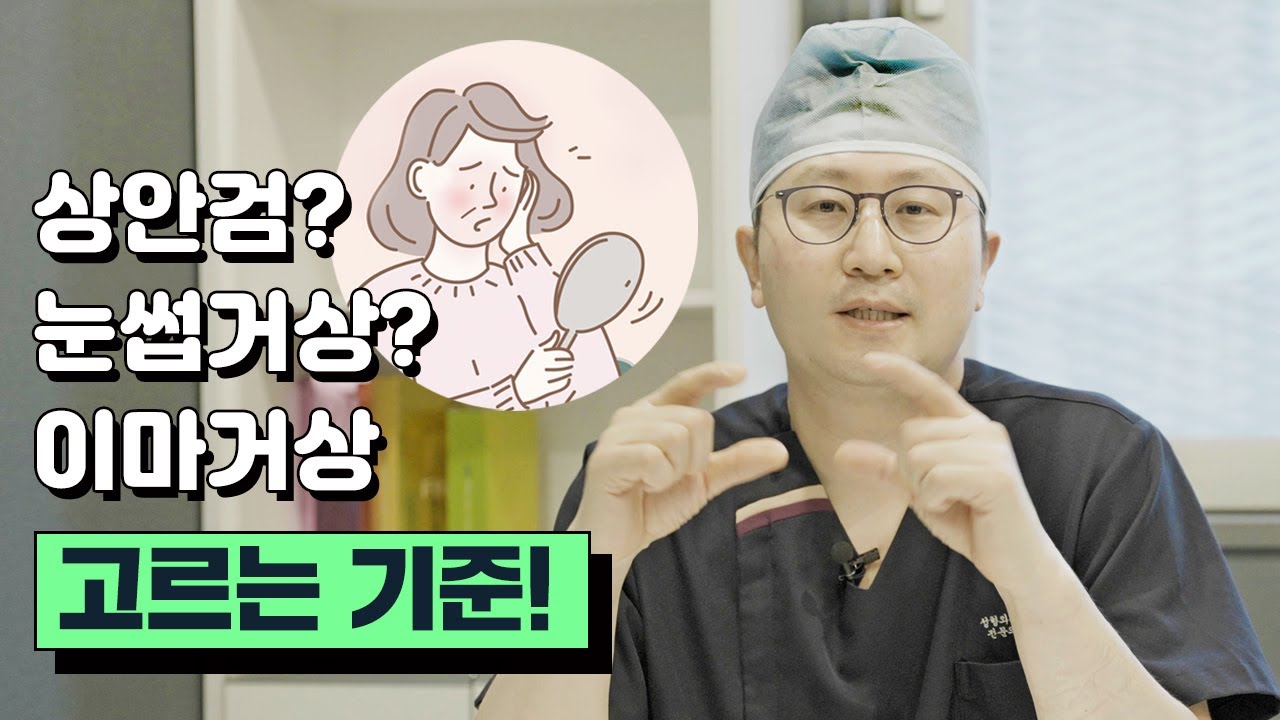
Sub-Brow Lift and Middle-Aged Eye Surgery: How It Differs from Upper BlepharoplastyImproving Droopy Eyes: Upper Blepharoplasty? Brow Lift? Forehead Lift? We Explain the DifferencesDroopy Eye Surgery! Sub-Brow Lift Technique? Side Effects?
1 / 3
This links to a video on the Face Plus Plastic Surgery YouTube channel. View All FacePlus TV
13
Surgeries and procedures worth considering together
These are surgeries and procedures often discussed together with this surgery during consultations. Whether to have them together is decided after an examination.
Kim YS, Roh TS, Yoo WM, Tark KC, Kim J. Infrabrow excision blepharoplasty: applications and outcomes in upper blepharoplasty in Asian women. Plast Reconstr Surg. 2008;122(4):1199-1205. PMID 18827656. doi:10.1097/PRS.0b013e3181858fc0
Lee D, Law V. Subbrow blepharoplasty for upper eyelid rejuvenation in Asians. Aesthet Surg J. 2009;29(4):284-288. PMID 19717059. doi:10.1016/j.asj.2009.02.008
Looi A, Tan L. Subbrow Blepharoplasty to Augment Blepharoptosis Repair in East Asian Patients. Plast Reconstr Surg Glob Open. 2026;14(8):e7967. PMID 42592551. doi:10.1097/GOX.0000000000007967
Falcon Rodriguez L, Kuruoglu D, Salinas CA, Liu A, Wagner LH, Bradley EA, Bite U, Mardini S, Sharaf BA. Eyelid and Brow Rejuvenation: Technical Pearls and Outcomes of Upper Blepharoplasty with or without Ptosis Correction and Brow Lift. Plast Reconstr Surg. 2024;154(6):1199-1207. PMID 38315110. doi:10.1097/PRS.0000000000011324
Xu L, Zhong X, Wang T. Quantitative and Aesthetic Analysis of Changes in Eyebrow Position After Subbrow Blepharoplasty. Aesthetic Plast Surg. 2024;48(21):4299-4306. PMID 39168877. doi:10.1007/s00266-024-04255-z
Ichinose A, Sugimoto T, Sugimoto I, Ishinagi H, Kuwazuru K, Nagai K, Tahara S. Extended infrabrow excision blepharoplasty for dermatochalasis in asians. Arch Facial Plast Surg. 2011;13(5):327-331. PMID 21931087. doi:10.1001/archfacial.2011.53
Sugamata A. Infraeyebrow blepharoplasty for blepharochalasis of the upper eyelid: its indication and priority. Plast Surg Int. 2012;2012:975097. PMID 22570783. doi:10.1155/2012/975097
Hass AN, Penne RB, Stefanyszyn MA, Flanagan JC. Incidence of postblepharoplasty orbital hemorrhage and associated visual loss. Ophthalmic Plast Reconstr Surg. 2004;20(6):426-432. PMID 15599241. doi:10.1097/01.iop.0000143711.48389.c5
Wong J, Lam DP, Abrishami A, Chan MT, Chung F. Short-term preoperative smoking cessation and postoperative complications: a systematic review and meta-analysis. Can J Anaesth. 2012;59(3):268-279. PMID 22187226. doi:10.1007/s12630-011-9652-x
Dr. Park Jung Keun · Plastic Surgery Specialist, PhD in Medicine
He personally consults on and performs facial aging treatments such as facelift, droopy eyelid surgery, and thread lift. The doctor personally sees you from consultation through recovery.
2004 Plastic Surgery Specialist2013 PhD in Medicine, Seoul National UniversityVice President, Korean Association of Plastic Surgeons
The content of this page is general medical information provided in accordance with the Medical Service Act, and the effects and recovery time of surgeries and procedures may vary by individual. All surgeries and procedures can cause side effects, so please make your decision only after a thorough consultation with a plastic surgery specialist.
Consultation & Booking
We begin by looking together, through thorough consultation, at whether surgery is needed
Facelift, droopy eyelid surgery, and thread lift: Dr. Park Jung Keun personally checks every stage, from consultation to recovery. Please schedule by phone or KakaoTalk, or leave a consultation request form.


 한국어
 English
 简体中文
 繁體中文
 日本語
 Монгол
 Русский
 ไทย
 Indonesia
 Tiếng Việt
 العربية



 Lower Blepharoplasty
 Fat Grafting
 Refill (Lifting + Filler)
