Upper blepharoplasty is surgery that cuts away, along the eyelid crease, the upper eyelid skin that has stretched and covers the eye.
With age, the skin of the upper eyelid stretches. When the stretched skin comes down toward the eyelashes, it covers the eye.
Upper blepharoplasty cuts away this excess skin. In medical terms, it is called upper eyelid plasty (upper blepharoplasty).
A Word from the Doctor
"There are various considerations, such as whether to create a double eyelid and where to make the skin incision, but what does not change in principle is removing the skin of the drooping eyelid."
Changes that occur when the upper eyelid droops
With age, the upper eyelid droops and may block the field of vision, or the skin where the drooping skin overlaps may become macerated and ooze fluid. People whose double eyelid was originally high find that the line becomes lower and their eyes feel smaller. In particular, if the outer skin droops a lot, the impression can look gloomier, or the outer part of the double eyelid line looks especially lower.
Face PlusShould upper and lower blepharoplasty, which correct sagging eyes above and below, be done separately? Or together?
Face Plus Plastic Surgery's midlife eye surgery addresses the underlying cause. The plastic surgery specialist who performs the surgery personally handles everything from the consultation to the operation.
Face PlusFace Plus Plastic Surgery's midlife eye surgery addresses the underlying cause
The plastic surgery specialist who performs the surgery personally handles everything from consultation to operation
Addressing aesthetic and functional problems at the same time
Minimizing the scar at the incision site
Improving wrinkles caused by weak eye-opening strength
Improvement of skin maceration at the outer corner of the eye
Face PlusMiddle-Aged Eye Surgery CHECK — Thinking About Droopy Eyelid Surgery?
01
Upper Blepharoplasty
Creates a double eyelid while removing sagging skin
02
Sub-Brow Lift
Removes sagging skin without creating a separate double eyelid
In this way, the method differs depending on the shape you want and each person's condition. From the patient's side, deciding in advance whether you want a double eyelid you did not have before, or whether you do not want a change in your impression, makes the decision somewhat easier. After sagging eyelid skin is removed with middle-aged eye surgery, opening the eyes becomes much easier and the impression looks much brighter.
02
When is upper blepharoplasty done?
It is done when excess upper eyelid skin remains and covers the eye.
Read the list below and picture your own eyes in the mirror. If any of these apply, we will check at the consultation whether upper blepharoplasty is right for you.
When your eyes feel uncomfortable
Your eyes feel heavy and tight
Your upper field of vision is blocked
Your forehead strains when you open your eyes
Skin at the outer corner overlaps and becomes sore
When you are concerned about how your eyes look
People tell you that you look sleepy or tired
Your eyes look small
Eyeshadow creases and smears
Your double eyelid has become faint or covered over
Check in front of a mirror
Before the consultation, a single mirror can give you a rough idea of the direction.
Relax your forehead completely and look straight ahead.
Gently lift your eyebrow with a finger. If the heavy feeling disappears, an eyebrow-related problem may be mixed in.
Conversely, press your eyebrow in place with a finger and open your eyes. You can see how far the eye opens without borrowing force from the forehead.
See which side is covered. The operation differs between when only the outer corner of the eye is covered and when the covering extends to the inner (nasal) side.
Steps 3 and 4 are the same as what the doctor checks directly in the exam room. A mirror can only give a rough idea of the direction. The actual distinction is made at the examination.
Face PlusUpper Blepharoplasty Is Recommended for People Like These
Severe eyelid drooping due to aging
Drooping eyelids that block your field of vision
If the skin at the outer corner of the eye is macerated
If eyelashes poke into the eye and cause discomfort
When you want aesthetic and functional improvement at the same time
03
Are there cases of eye drooping that upper blepharoplasty cannot resolve?
Yes. If the muscle that opens the eye is weak or the eyebrow has dropped, cutting away skin alone will not resolve it.
The reason the eyes look heavy is not always the same. There are three main causes for the upper eyelid covering the eye. Using a curtain as an analogy, they are as follows.
Surgery to raise the forehead or eyebrows is discussed together
It also differs depending on where the drooping is
If only the outer corner of the eye is covered, both upper blepharoplasty and under-brow incision are possible. Under-brow incision is not an operation that raises the eyebrow; it cuts away the skin just below the eyebrow.
It is different when the drooping also extends to the inner (nasal) side. An approach from beneath the eyebrow alone leaves the sagging on the nasal side. In this case, upper blepharoplasty is considered.
The surgery is done under local anesthesia and takes 1 hour to 1 hour 30 minutes. You go home the same day without being hospitalized.
01
Design
The area to be removed is marked while you are sitting up, because the position of the skin differs between lying down and sitting
02
Anesthesia
Local anesthesia is standard
03
Excision
The excess skin is cut away along the eyelid crease
04
Checking and Suturing
During surgery you are asked to open your eyes so that the balance between the two sides can be checked. The incision is closed with fine sutures
05
Going Home
You go home the same day
Face PlusUpper Blepharoplasty Procedure
01Customized design consultation tailored to the patient's eye shape, degree of skin sagging, and other conditions02Eyelid incision, removal of loose skin03Forming the double eyelid line04Completing lively eyes after delicate suturing
05
How long does recovery from upper blepharoplasty take?
Swelling is worst on day 3, and by about 2 weeks it does not interfere with daily life. It takes about 6 months to settle completely.
If you have work or an important appointment coming up, this is probably what you most want to know. We have written it by time point.
Swelling is worst on day 3, not right after surgery. Even if you look more swollen on day 2 than the day before, that is within this course.
Surgery to day 3
Swelling gradually increases. It is worst on day 3
Day 7
The stitches are removed
About 1 week
Swelling is still noticeable
About 2 weeks
Daily life is not disrupted
About 6 months
Fully settled
Activity
Time point
Light daily activities
From right after surgery
Going to work
About 3 days later
Washing your face
After stitch removal
Makeup that avoids the eye area
After stitch removal
Eye makeup and contact lenses
After about 2 weeks
The speed of recovery differs from person to person. If you have an important event coming up, please tell us in advance at the consultation.
Precautions after surgery
Cold compresses, sleeping position, and when to resume exercise, alcohol, and contact lenses:
Do not wait in these cases
If something feels wrong after surgery, do not put up with it on your own.
Symptoms to check promptly:
So that you do not have to get through recovery alone, Dr. Park Jung Keun and the nursing team check on swelling, pain, and how you are feeling together.
06
Will the scar from upper blepharoplasty be noticeable?
A scar remains. However, because the incision line is placed along the eyelid crease, it folds into the crease when you open your eyes.
It is natural to worry about leaving a mark on your face. For that reason, we will tell you honestly where and how the scar remains.
At first the incision line is red. It fades over time.
How to care for the scar (ointment, sun protection, tape):
07
Face Plus Talk
Upper blepharoplasty is probably the most commonly performed operation for anti-aging.
— Dr. Park Jung Keun, Plastic Surgery Specialist · Face Plus Talk
Upper blepharoplasty is performed very often, especially in older patients. It is probably the most frequently performed operation for anti-aging. There are several things that people often wonder about, and that must be considered, when performing upper blepharoplasty.
First, you need to decide whether or not to create a double eyelid. The usual method of upper blepharoplasty creates a double eyelid at the same time. For women, the double eyelid is made visible, and for men it is made natural and almost invisible, like a hidden (inner) double eyelid. The double eyelid lines of women and men naturally differ. However, when someone who had no double eyelid at all ends up with even a thin one, many people worry that their impression may change.
And if the amount of drooping skin is large and a lot has to be corrected, a harsh-looking impression may persist for a while.
Because the biggest worry when considering upper blepharoplasty is that the impression will change a lot and look harsh, many people are reluctant about creating a double eyelid. This is especially true of men. So in such cases, a method that does not create a double eyelid should be considered.
As a method that removes drooping eyelid skin without creating a double eyelid, there is the sub-brow lift performed through an under-brow incision. Also, if the eyebrows have dropped a lot, a forehead lift that raises the eyebrows may be needed. If the distance between the eyebrow and the eye is narrow and close, creating a double eyelid can emphasize a harsh-looking impression. So in such cases, it is better to raise the eyebrows with a forehead lift and then perform upper blepharoplasty.
Therefore, it is important to decide on the specific method of correction through sufficient consultation and examination before surgery. Sufficient experience that allows the results after surgery to be predicted to some degree is also important.
There is no single correct answer for a surgical method. After a thorough consultation, we proceed with a surgical method tailored to each individual. Online Consultation
08
Frequently Asked Questions
What kind of anesthesia is used for upper blepharoplasty?
Local anesthesia is standard, and sedation can be added if you wish. Deep sedation, in which you fall completely asleep, is not performed.
We fully understand wanting everything to be over while you are fast asleep. Even so, there are two reasons we do not use deep sedation.
The first is safety.
The second is that you need to open your eyes during surgery. Only by actually opening your eyes can the balance between the two sides be checked. If you are deeply asleep, this check cannot be done.
What side effects can occur with upper blepharoplasty, and how often?
After surgery, temporary swelling, bruising, tightness or dryness may appear, and most of these gradually improve during recovery. Depending on the person, scarring, left–right asymmetry or eyes that do not close completely may occur, so it is important to check the condition of the eyes thoroughly before surgery and to plan a surgery suited to you. The likelihood of side effects and the course of recovery may vary depending on your condition and the surgical method.
Do the eyebrows drop after upper blepharoplasty?
As the eyelid skin is tightened, the habit of raising the eyebrows to open the eyes before surgery eases, so the eyebrows may look lower. It is therefore important to assess the eyebrow position and eye-opening strength accurately before surgery and to plan a surgery suited to your eyes.
Are there cases in which I should not have upper blepharoplasty, or should postpone it?
Typically, if the eye-opening muscle is weak or ptosis is the cause, ptosis correction surgery also needs to be considered. Another case is when less than 6 months have passed since a previous eye surgery. Revision is decided at least 6 months after the first surgery.
How long does upper blepharoplasty take? Do I need to be hospitalized?
It takes 1 hour to 1 hour 30 minutes. Local anesthesia is standard, and sedation can be added if you wish. There is no hospital stay, and you go home the same day.
After upper blepharoplasty, when can I go back to work, wash my face, and wear makeup?
You can return to work after about 3 days. Stitches are removed on day 7 after surgery, and you can wash your face after the stitches are removed. Eye makeup is possible after about 2 weeks.
Will my eyes feel dry and gritty after upper blepharoplasty?
After upper blepharoplasty, your eyes may temporarily feel stiff or dry, or you may feel as if something is in your eye. These symptoms can appear because of swelling after surgery or temporary changes in the eyelids, and they vary depending on your eye condition and the extent of the surgery.
In most cases, these symptoms can improve during recovery. However, they may become worse if you already have dry eye syndrome or if your eyes do not close completely after surgery.
After surgery, please care for your eyes as instructed by the medical team, and contact us if the discomfort continues or gets worse.
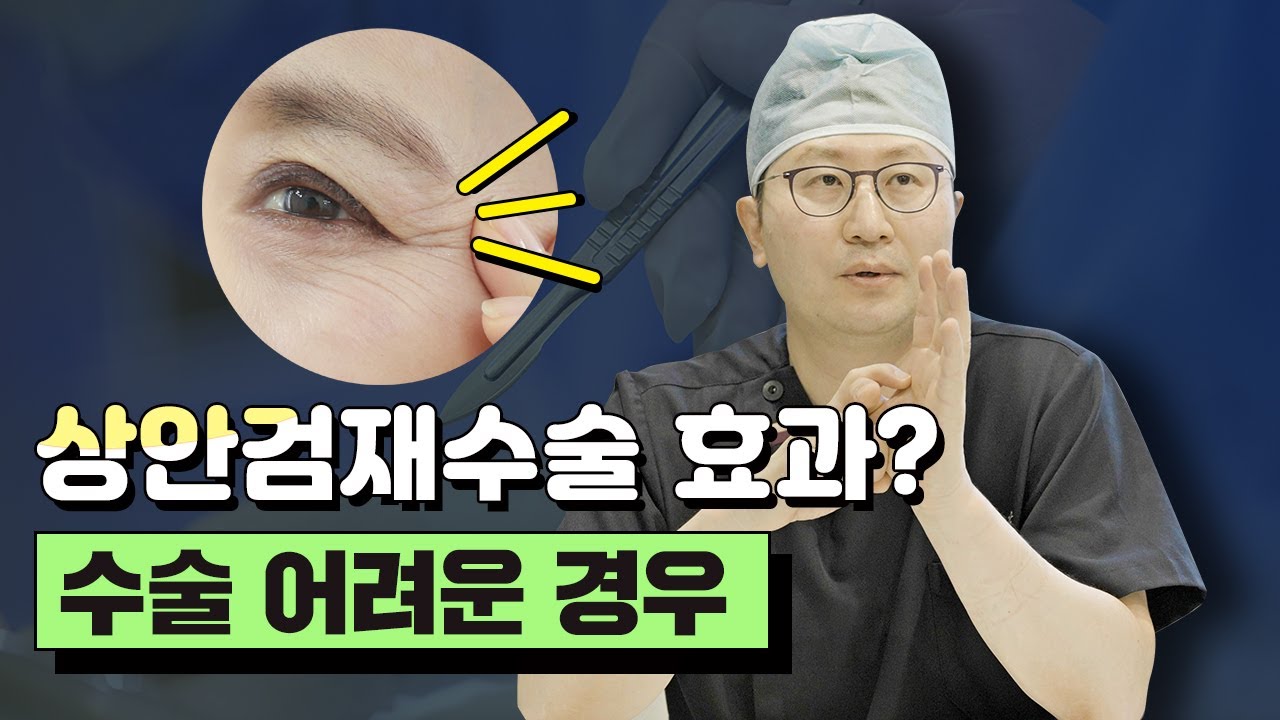
Upper and Lower Blepharoplasty Explained Simply | Separate Surgeries? Combined Surgery?Who Benefits from Upper Blepharoplasty? | Upper Blepharoplasty Recovery TimeIs Revision Upper Blepharoplasty Effective? | Easy Cases vs. Difficult Cases of Revision Upper BlepharoplastyImproving Droopy Eyes: Upper Blepharoplasty? Brow Lift? Forehead Lift? We Explain the Differences
1 / 4
This links to a video on the Face Plus Plastic Surgery YouTube channel. View All FacePlus TV
11
Surgeries and procedures worth considering together
These are surgeries and procedures often discussed together with this surgery during consultations. Whether to have them together is decided after an examination.
Falcon Rodriguez L, Kuruoglu D, Salinas CA, Liu A, Wagner LH, Bradley EA, Bite U, Mardini S, Sharaf BA. Eyelid and Brow Rejuvenation: Technical Pearls and Outcomes of Upper Blepharoplasty with or without Ptosis Correction and Brow Lift. Plast Reconstr Surg. 2024;154(6):1199-1207. Epub 2024-02-02. PMID 38315110. doi:10.1097/PRS.0000000000011324
Wormer BA, Rankin TM, Kaoutzanis C, Al Kassis S, Gupta V, Grotting JC, Higdon KK. Does Brow Lift Add Risk to Blepharoplasty? Answers From a Multicenter Analysis of 6126 Patients Undergoing Aesthetic Eye Surgery. Ann Plast Surg. 2023;90(4):288-293. PMID 29369102. doi:10.1097/SAP.0000000000001255
Todorov D, Mitchell S, Al-Hashimi M, Dajani Z, Yap KSH, Imtiaz H, Daneshi K, Khajuria A. Functional and Aesthetic Outcomes After Upper Blepharoplasty: A Systematic Review and Meta-analysis of Randomized Control Trials. Aesthet Surg J. 2025;45(6):554-562. PMID 40152471. doi:10.1093/asj/sjaf022
Mian OT, Lippe CM, Khan A, Bugg VA, Bryant JC, Riaz KM, Dvorak JD, Ding K, Moreau A. Dry eye in the upper blepharoplasty patient: a study comparing orbicularis-sparing versus orbicularis-excising techniques. Graefes Arch Clin Exp Ophthalmol. 2023;261(12):3625-3634. Epub 2023-06-24. PMID 37354267. doi:10.1007/s00417-023-06131-z
Rodrigues C, Carvalho F, Marques M. Upper Eyelid Blepharoplasty: Surgical Techniques and Results-Systematic Review and Meta-analysis. Aesthetic Plast Surg. 2023;47(5):1870-1883. Epub 2023-07-10. PMID 37430010. doi:10.1007/s00266-023-03436-6
Huijing MA, van der Palen J, van der Lei B. The effect of upper eyelid blepharoplasty on eyebrow position. J Plast Reconstr Aesthet Surg. 2014;67(9):1242-1247. Epub 2014-05-24. PMID 24939828. doi:10.1016/j.bjps.2014.05.022
Dar SA, Rubinstein TJ, Perry JD. Eyebrow Position Following Upper Blepharoplasty. Orbit. 2015;34(6):327-330. Epub 2015-10-27. PMID 26505314. doi:10.3109/01676830.2015.1078375
Menderes A, Çağlı HB. Change in Brow Position After Upper Blepharoplasty With or Without Internal Browpexy. Ann Plast Surg. 2024;93(4):420-424. Epub 2024-07-30. PMID 39150758. doi:10.1097/SAP.0000000000004068
Hollander MHJ, van der Hoeven JH, Verdonschot KHM, Delli K, Vissink A, Jansma J, Schepers RH. Effects of Upper Blepharoplasty Techniques on Headaches, Eyebrow Position, and Electromyographic Outcomes: A Randomized Controlled Trial. Int J Environ Res Public Health. 2023;20(2):1559. PMID 36674313. PMCID PMC9866996. doi:10.3390/ijerph20021559
Huang PJ, Mao SH, Yen CI, Yang SY, Hsiao YC, Yang JY, Chang SY, Chuang SS, Chen HC. Objective Comparison of Eyebrow Position after Internal and External Browpexy. Plast Reconstr Surg. 2023;152(3):414e-423e. Epub 2023-02-28. PMID 36847688. doi:10.1097/PRS.0000000000010310
Kokubo K, Katori N, Hayashi K, Sugawara J, Fujii A, Maegawa J. Evaluation of the eyebrow position after levator resection. J Plast Reconstr Aesthet Surg. 2017;70(1):85-90. Epub 2016-10-05. PMID 27773564. doi:10.1016/j.bjps.2016.09.025
Kovacic H, Wubbels RJ, Paridaens D. Efficacy of tarsoconjunctivomullerectomy in adults with acquired aponeurogenic blepharoptosis: a large single-surgeon case-series. Orbit. 2023;42(3):262-268. Epub 2022-07-10. PMID 35815460. doi:10.1080/01676830.2022.2092155
Dr. Park Jung Keun · Plastic Surgery Specialist, PhD in Medicine
He personally consults on and performs facial aging treatments such as facelift, droopy eyelid surgery, and thread lift. The doctor personally sees you from consultation through recovery.
2004 Plastic Surgery Specialist2013 PhD in Medicine, Seoul National UniversityVice President, Korean Association of Plastic Surgeons
The content of this page is general medical information provided in accordance with the Medical Service Act, and the effects and recovery time of surgeries and procedures may vary by individual. All surgeries and procedures can cause side effects, so please make your decision only after a thorough consultation with a plastic surgery specialist.
Consultation & Booking
We begin by looking together, through thorough consultation, at whether surgery is needed
Facelift, droopy eyelid surgery, and thread lift: Dr. Park Jung Keun personally checks every stage, from consultation to recovery. Please schedule by phone or KakaoTalk, or leave a consultation request form.


 한국어
 English
 简体中文
 繁體中文
 日本語
 Монгол
 Русский
 ไทย
 Indonesia
 Tiếng Việt
 العربية





 Lower Blepharoplasty
 Fat Grafting
 Refill (Lifting + Filler)
