Rhinoplasty

Rhinoplasty

Face Plus rhinoplasty, beautiful inside and out: anatomical analysis inside the nose + balance with the face shape + autologous tissue

Rhinoplasty is surgery that corrects the height of the nasal bridge, the shape of the nasal tip, a hump, a deviated nose, a short nose, and the width of the nostril wings.

No smoking before surgery
Recommended from 3 to 4 weeks before surgery
Deciding on revision
After at least 6 months have passed since the first operation
Face Plus Plastic Surgery nose page model photo
Table of contents for this page
  1. What Is Rhinoplasty?
  2. What Is the Structure of the Nose?
  3. What Raises the Nasal Bridge? How Do Implants and Your Own Cartilage Differ?
  4. How Is the Nasal Tip Shaped?
  5. How Is a Hump Nose Corrected?
  6. How Is a Deviated Nose Corrected?
  7. How Are Short or Upturned Noses Corrected?
  8. How Is Alar Reduction Done?
  9. How Is Rhinoplasty Performed?
  10. How Long Does Rhinoplasty Recovery Take?
  11. How Do I Get a Rhinoplasty Consultation?
  12. Face Plus Talk
  13. Frequently Asked Questions
  14. Related FacePlus TV Videos
  15. Related surgeries and procedures worth looking at together
  16. References

If you opened this page because the shape of your nose in the mirror keeps bothering you, here is the basic information first.

The nose is in the middle of the face, so even a small change looks big. That is why we decide together at the consultation which part to change and by how much.

The first of our treatment principles is “We never recommend excessive surgery.” We do not recommend a height or length that is excessive for the condition of your nose.

01

What Is Rhinoplasty?

Rhinoplasty is surgery that reshapes the bone and cartilage of the nose and the skin covering them to change the height, shape, and direction of the nose.

The areas treated differ depending on your concern. In many cases, several are done together at once. First find your concern in the table below.

ConcernCommon correction methodExplanation on this page
Low nasal bridgeAn implant (artificial material) or autologous tissue (tissue from your own body) is placed on the nasal bridge to raise itNasal Bridge
Blunt or low nasal tipThe nasal tip cartilage is gathered and tied, or cartilage is added, to change the shape and heightNasal Tip
The bridge of the nose protrudes (hump nose)The protruding bone and cartilage are ground down to lower them, and if necessary the nasal bones are cut and brought togetherHump Nose
The nose is bent to one side (deviated nose)The nasal bone and the partition inside the nose (septum) are straightened togetherDeviated Nose
The nose is short or upturned (short nose)The nasal tip is lowered to lengthen the noseShort Nose
Wide nostril wingsA small amount of nostril wing skin is cut away to reduce the widthNostril Wings
Uncomfortable with the result of a previous rhinoplastyReplacing or removing the implant, rebuilding with cartilageRevision Rhinoplasty

The profile of the nose is seen together with the balance of the forehead and chin. When the chin sits back and makes the nose look large, this is explained in Chin Surgery Information.

Skin thickness, bone structure, and face shape differ from person to person. Rhinoplasty that does not take these into account tends to leave an artificial impression, such as an overly high nasal bridge or a thin nasal tip, and easily leads to revision surgery. That is why we design the nasal bridge and nasal tip line while also considering harmony with the face shape and facial features.

Face PlusDesign Based on Anatomical Analysis with 3D-CT and Facial Balance

Face Plus rhinoplasty, beautiful inside and out, considers both function and shape using autologous tissue. Centered on nasal tip surgery, depending on the type of nose—low nasal bridge, bulbous nasal tip, deviated nose, short nose, drooping nasal tip, hump nose—we combine nasal bridge surgery, hump correction, and so on to form an ideal nasal bridge line.

Face PlusAdvantages of Face Plus Nasal Tip Surgery

  1. 01
    Meticulous correction

    The nasal tip cartilage is corrected thoroughly to prevent the nasal tip from lifting over time

  2. 02
    1:1 Custom Nasal Tip Surgery

    Custom design based on the current condition and balance of the nasal tip

  3. 03
    Beautiful Profile Line

    Lifting a drooping nasal tip to complete a feminine profile line

  4. 04
    Improvement of a Protruding Mouth

    As the nasal tip rises, the protruding mouth is expected to appear relatively set back

  5. 05
    Surgery by a Dedicated Medical Team

    Safe and careful, with rhinoplasty performed by a dedicated medical team

Face PlusFacePlus Nasal Tip Surgery Is Recommended for These People

  • If the nasal tip is too pointed and lacks flesh
  • If the nasal tip is blunt or low
  • If the nasal tip droops and makes the nostril wings look wide
  • If nasal tip cartilage shows through after nose surgery
Side profile of a female model with a finger on her chin

Face PlusIn Rhinoplasty, the Medical Team's Aesthetic Sense Matters as Much as Surgical Technique

A medical team with long surgical experience and an accumulation of data from diverse rhinoplasty cases
designs the most ideal nasal bridge and nasal tip line in consideration of facial balance

Side profile of a female model
  • Surgery performed by a dedicated medical team with aesthetic sense
  • Golden-ratio design that considers facial balance
  • Custom implants made to suit your skin and skeletal structure
  • Bruising and swelling management for faster recovery

Face Plus RhinoplastyDepending on what the problem is

Wide nostril wings and large nostrils look heavyAlar reduction is surgery that reduces the overall width of the nostril wing area and the width of the nostrils. It cannot be recommended when the nostrils are small, so we give an honest consultation and correct naturally without overcorrection.
Not satisfied with a previous nose surgery resultCorrection methods differ by cause: an implant that looks bent or moves, a deformed nasal tip, contracture, or a nasal bridge that is too high or narrow. It is advisable to wait at least 6 months to 1 year after the previous rhinoplasty.
A ready-made implant does not fit my noseFITme is a 3D custom silicone implant made to fit your nose's anatomical structure exactly, with no gaps between the bone and the implant. It is especially needed for glabella design, hump nose, asymmetric nose, and revision patients.

Face Plus RhinoplastyComparison at a Glance

Surgery · ProcedureProcedure timeAnesthesiaStitch removalRecovery time
FacePlus RhinoplastyAbout 1.5 hoursSedationDay 7Daily activities possible after 3 days
Alar ReductionAbout 1.5 hoursSedationAfter 7 daysDaily activities possible after 7 days
Revision RhinoplastyAbout 2 hoursSedation, local anesthesiaAfter 1 weekDaily activities possible after 1 week
Low Nasal BridgeAbout 1.5 hoursSedationDay 7Daily activities possible after 3 days
Bulbous Nasal TipAbout 1.5 hoursSedationDay 7Daily activities possible after 3 days
Deviated NoseAbout 1.5 hoursSedationDay 7Daily activities possible after 3 days
Short NoseAbout 1.5 hoursSedationDay 7Daily activities possible after 3 days
Drooping Nasal TipAbout 1.5 hoursSedationDay 7Daily activities possible after 3 days
Hump NoseAbout 1.5 hoursSedationDay 7Daily activities possible after 3 days

* May vary depending on the patient's condition and surgical method.

02

What Is the Structure of the Nose?

The upper part of the nose is bone and the lower part is cartilage, with skin covering them.

It is a bit technical, but knowing this makes the explanations that follow much easier.

The upper part of the nasal bridge is hard nasal bone. The lower part of the nasal bridge and the nasal tip are flexible cartilage. Between the nostrils, on the inside, there is a partition that supports the nose from the middle.

Mechanism

The upper third of the nose is the nasal bone, and below it are the upper lateral cartilage (the cartilage of the lower part of the nasal bridge) and the lower lateral cartilage (the nasal tip cartilage, or alar cartilage). In the middle inside the nose is the septum (the partition inside the nose), made of cartilage and bone, which supports the nasal bridge and nasal tip from below. The shape and height of the nasal tip are determined together by the shape of the lower lateral cartilage, the supporting strength of the septum, and the thickness of the nasal tip skin.

In plain terms — The upper part of the nose is bone and the lower part is cartilage. The partition in the middle of the nose supports it like a pillar. That is why changing the nasal tip often requires working on both the cartilage and this pillar.

In a nose with thick skin, the visible change may be small even when the cartilage is reshaped. Skin thickness is also checked at the consultation.

03

What Raises the Nasal Bridge? How Do Implants and Your Own Cartilage Differ?

The nasal bridge is raised by inserting an implant, or by placing your own cartilage or tissue, or donor rib cartilage (cartilage from a donated rib), on the bridge.

No single material can be called better. Each material has different advantages and drawbacks that you have to accept.

A Word from the Doctor

“What matters more in rhinoplasty is not the specific method or material but the shape of the beautiful nose you want to create.”

MaterialCharacteristicsDrawbacks
Silicone implantThe shape is consistent. If a problem occurs, it is relatively easy to removeA capsule (a thin membrane that wraps around the implant) forms around it. Infection, showing through the skin, movement, and capsule contracture can occur
ePTFE implant (Gore-Tex type)Tissue grows into the tiny pores and settles in placeBecause it bonds with tissue, it is harder to remove than silicone. Infection can occur
Septal cartilage (the cartilage of the partition inside the nose)Straight and firm. It is obtained from the same surgical siteThe amount obtainable is small. Many East Asians do not have much of it. Enough must be left to support the septum
Ear cartilageUsed together to supplement when septal cartilage is insufficient. Mainly used to reinforce the nasal tipIt is curved, so the amount and shape may be insufficient to build up the whole nasal bridge
Donor rib cartilage (allogeneic rib cartilage)A large amount can be used without making an incision in your own chestOver time, part of it may be absorbed or bend
Your own rib cartilage (autologous rib cartilage)An abundant, firm, good materialWhen it is harvested, an incision scar remains on the chest, the cartilage can bend, and, rarely, pneumothorax can occur
Dermis · fascia (the deep layer of skin; the membrane wrapping muscle)Used to cover the nasal bridge softlyPart of it can be absorbed

At Face Plus Plastic Surgery, when your own cartilage is needed, we use septal cartilage first and often use ear cartilage together as a supplement. This is because East Asians often do not have much septal cartilage, so septal cartilage alone is often not enough. If there is a significant shortage of cartilage, donor rib cartilage may be used. Your own rib cartilage is a good material, but problems and aftereffects from harvesting can occur, so we rarely harvest it.

Complications by Material

If you have had filler injected into your nose, please tell us at your consultation. If filler remains, the surgical plan may change. Using filler to supplement the nasal bridge is explained in Filler Procedure Information.

Face PlusNasal Tip Surgery

A high, slim nasal bridge can be expected to give a refined look and make the face look smaller.
Even a slight lift of a drooping nasal tip improves a protruding mouth.

Side profile of a female model looking upward

Face Plus nasal tip surgery is designed by considering comprehensive aspects such as the shape of the current nasal tip, the overall length of the nose, and the balance of the face from the front and the side.

If needed, nasal bridge surgery, hump correction, and so on are combined to form an ideal nasal bridge line.

04

How Is the Nasal Tip Shaped?

The height and direction of the nasal tip are changed by gathering and tying the nasal tip cartilage, or by adding and joining cartilage.

Female model looking at an angle

A Word from the Doctor

“Most of the time in rhinoplasty is spent shaping the nasal tip rather than the nasal bridge.”

A blunt nasal tip often has cartilage on both sides that has spread apart. Gathering this cartilage toward the middle and tying it narrows the nasal tip.

To raise the nasal tip further or lower it, a support is needed. For this, septal extension (a method of attaching cartilage to the cartilage of the partition inside the nose) is used.

Mechanism

The septal extension graft is a method of attaching and fixing a piece of cartilage to the end of the septal cartilage and then tying the lower lateral cartilage onto it, and it has been introduced as a way to control the projection (height) and shape of the nasal tip. It has been emphasized that the end of the septum that serves as the support must be strong[3]. It is also used to lower the nasal tip or change how much it is upturned.

In plain terms — Cartilage is added to the end of the partition inside the nose to lengthen the pillar, and the nasal tip cartilage is placed on it and tied. It is a method of building a new support for the nasal tip to rest on.

If the nasal tip skin is thin, the outline of the added cartilage may show through. If the skin is thick, the change may be less visible.

05

How Is a Hump Nose Corrected?

The protruding bone and cartilage of the nasal bridge are ground down to lower them, and if necessary the nasal bones are cut and brought toward the middle.

Some people are bothered because the bump on the nasal bridge is the first thing they notice in a profile photo.

If only the protruding part is ground down, the top of the nasal bridge becomes flat and wide. To narrow the nasal bridge that has widened in this way, an osteotomy (cutting the bone to move its position) is performed on the nasal bones as well.

If the hump is small, there is also a method of not grinding it down but filling the areas above and below it to even out the line. Which is right is decided by looking at the height of the nasal bridge and the profile of the face.

06

How Is a Deviated Nose Corrected?

A deviated nose often requires straightening not only the outer nasal bone but also the partition inside the nose.

When the nose is bent, the partition inside the nose is often bent too, and one side of the nose may be blocked. If you have nasal obstruction, please be sure to tell us at your consultation.

For nasal obstruction, we first check the cause before surgery[4]. Besides a bent septum, mucosal problems such as rhinitis can be the cause, and treatment differs depending on the cause.

07

How Are Short or Upturned Noses Corrected?

A short nose is corrected by surgery that lowers the nasal tip to lengthen the nose, and there is a limit to how much the skin can stretch.

To lower the nasal tip, a support is made with the septal extension described earlier, and the nasal tip is fixed on top of it.

How much it can be lengthened is explained at the consultation after directly feeling the nasal tip skin. Rather than being greedy, we look together for what the skin allows.

08

How Is Alar Reduction Done?

Alar reduction is surgery that reduces the width of the nostril wings by cutting away a small amount of skin from the crease outside the nostril wing or from inside the nostril.

The area where tissue was removed is sutured (stitched) along the crease where the nostril wing meets the cheek. So the scar lies within the crease, but a scar does remain.

If too much is removed, the nostril shape can look awkward or the two sides can differ. Removed skin is hard to restore, so only the necessary amount is reduced.

09

How Is Rhinoplasty Performed?

At the consultation the areas to change are decided, and after anesthesia surgery is performed through an incision inside the nostrils or below the columella.

Since it may feel vague the first time, we have laid it out step by step.

There are broadly two incision methods.

MethodIncision locationCharacteristics
Closed approachInside the nostrils onlyNo scar is left on the outside. There are limits to working while directly viewing the nasal tip cartilage
Open approachInside the nostrils + a small incision below the columellaThe nasal tip cartilage can be worked on while directly viewing it. A small scar remains on the columella

1. Consultation and planning

We decide which areas to change and by how much. Please tell us about nasal obstruction, rhinitis, previous nose procedures or surgery, and any medications you take.

2. Anesthesia

3. Incise, then shape the bone and cartilage

According to the plan, the nasal bridge is raised, the nasal tip cartilage is gathered, or bone is ground down and cut.

4. Suture

5. Secure with a nasal splint and tape

The surgical shape is held in place with a nasal splint (a cover that holds the shape of the nose). Hemostatic cotton or splints may also be placed inside the nose.

Face PlusNasal Tip Surgery Methods

To raise a low nasal bridge — thoroughly correct the nasal tip cartilage to prevent the nasal tip from lifting over time
01To raise a low nasal bridge — thoroughly correct the nasal tip cartilage to prevent the nasal tip from lifting over time
For a refined nasal tip shape — nasal cartilage is tied and fixed on both sides of the columella
02For a refined nasal tip shape — nasal cartilage is tied and fixed on both sides of the columella
Using ear cartilage and similar material — additionally raise and fix the nasal tip
03Using ear cartilage and similar material — additionally raise and fix the nasal tip

In nasal tip surgery, it is important to set the exact position and shape of the nasal tip in consideration of balance, and to fix it carefully so the nasal tip does not lift over time. Once the position of the nasal tip is decided, nasal bridge surgery may be combined so that it connects organically to the nasal tip.

10

How Long Does Rhinoplasty Recovery Take?

Swelling and bruising go down a lot over the first few weeks, and it can take close to a year for the remaining swelling to go down and the shape of the nose to settle.

If you have work or an important appointment coming up, this is probably what you most want to know. We have written it by time point.

Time pointCourse
First few daysSwelling and bruising are at their worst. Bruising may extend down below the eyes
About 1 weekThe nasal splint and stitches are removed
1 monthAbout two-thirds of the swelling goes down[5]
6 monthsAbout 95% of the swelling goes down[5]
1 yearAbout 97.5% of the swelling goes down[5]

The percentages above are results of a study that measured the noses of 40 people who underwent primary open rhinoplasty using 3D photographs, and they vary from person to person[5].

If the skin of the nasal tip is thick, swelling can last longer. The shape right after surgery is not the final shape. There is no need to be impatient.

After surgery, you will visit the clinic 2 to 3 times over about 2 weeks. The number and dates of visits are adjusted depending on the surgery and your recovery. Please keep the day your stitches are removed whenever possible; the other dates can be adjusted.

So that you do not have to endure recovery alone, the doctor and the nursing team check your swelling, pain, and condition together. The third of our treatment principles is “We see patients more frequently after surgery.”

Precautions after surgery

  • It is best to avoid blowing your nose hard or pressing on your nose.
  • It is best to avoid resting glasses on the bridge of your nose.
  • It is best to avoid sleeping face down.
  • We will advise you at the consultation about when to resume saunas, strenuous exercise, and alcohol.

Do not wait in these cases

If something feels wrong after surgery, do not put up with it on your own.

  • When your nose or face suddenly swells severely and the pain keeps getting worse
  • When a nosebleed does not stop
  • When the nose becomes red and swollen, or you have a fever and pus comes out
  • When the skin color of the nasal tip or nasal bridge turns white or dark red
  • When the implant shows through, moves, or becomes exposed outside the skin
  • When breathing through your nose becomes increasingly difficult
  • When the nose seems to be getting shorter or pulled upward
  • When you are short of breath or have chest pain after your own rib cartilage was harvested
  • When the inside of your nose feels completely blocked and the pain inside keeps getting worse (septal hematoma suspected)

If a nosebleed does not stop or sudden severe swelling occurs outside clinic hours, go to the nearest emergency room. If you are short of breath or have chest pain, call 119 immediately.

11

How Do I Get a Rhinoplasty Consultation?

You can call our main number, 02-541-8500, or apply through Consultation & Booking information.

The clinic is located on the 4th floor of Vorati Al Building, 480 Gangnam-daero, Gangnam-gu, Seoul. It is a 1-minute walk from Exit 3 of Sinnonhyeon Station.

At your consultation, please tell us about previous nose procedures and surgeries, whether you have nasal obstruction or rhinitis, any medications you take, and whether you smoke.

12

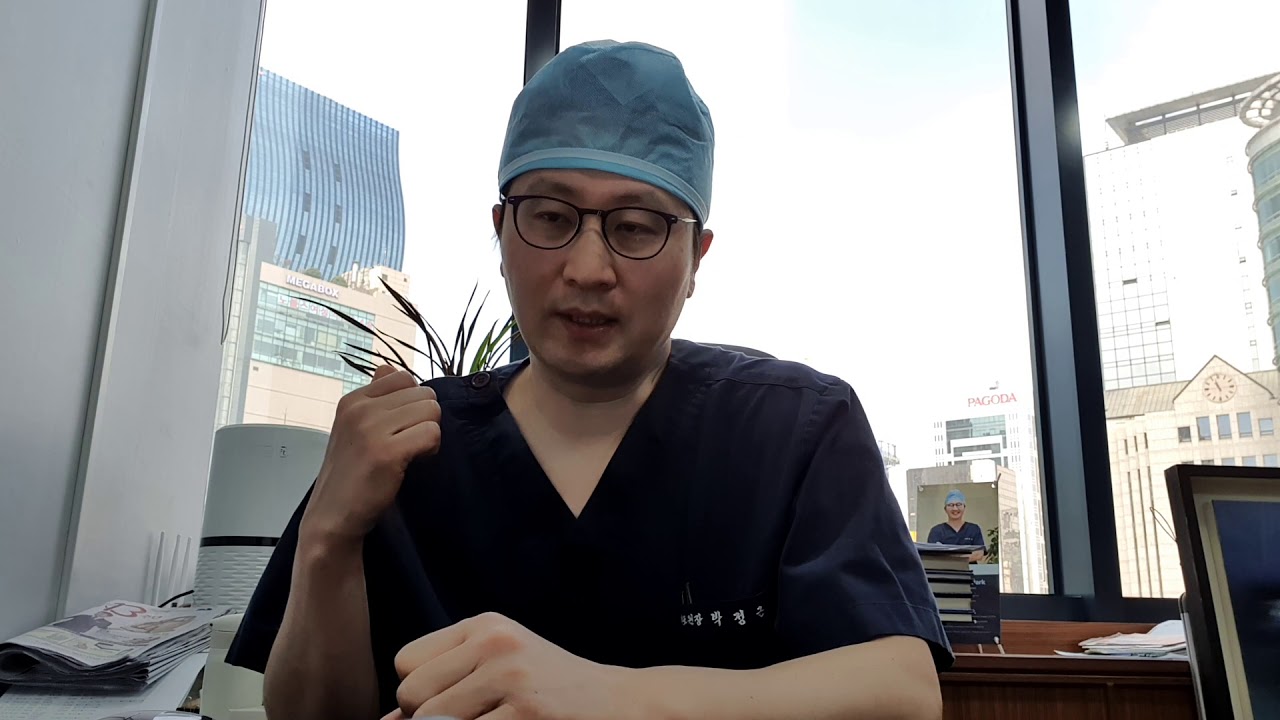
Face Plus Talk

Septal Cartilage, Ear Cartilage, Autologous Rib Cartilage — Which Autologous Cartilage Is Good for Nasal Tip Surgery?

— Dr. Park Jung Keun, Plastic Surgery Specialist · Face Plus Talk
Dr. Park Jung Keun

Rhinoplasty is broadly divided into nasal bridge surgery and nasal tip surgery. The two cannot be called separate, but the materials used for the two areas are very different. Generally, implants such as silicone are used for the nasal bridge, and autologous cartilage is used for nasal tip surgery. I will tell you about the three representative types of autologous cartilage.

First, the one most people know is ear cartilage. Ear cartilage can be harvested through an incision in front of or behind the ear. I usually harvest cartilage from behind the ear. I usually compare ear cartilage and septal cartilage in terms of whether it is thick, how strong it is, how much can be obtained, and so on. But it is hard to speak about this uniformly. This is because the amount of cartilage differs a lot from person to person and from site to site, and strength and thickness also differ greatly.

Second is the septal cartilage inside the nose. The septal cartilage is located inside the nose, in the middle of the nostril interior, and is a structure that divides the two sides. In fact, it is a structure that is not much needed, so if some supporting portion is left, removing it causes no problem at all. Septal cartilage is originally plentiful and thick, so it is a material widely used in recent rhinoplasty. Unlike ear cartilage, septal cartilage is flat and wide, so it is effective for making structures like support pieces.

Third is autologous rib cartilage. Autologous rib cartilage is the cartilage attached to the ribs, and it is the most abundant in both quantity and thickness. However, it must be harvested through an incision in the chest area, and other systemic risks also increase, so it is used as a last resort whenever possible. An incision of about 3-5 cm is made in the chest area, and the cartilage is sufficient in size and very thick.

Then which cartilage is the best material? There are the general characteristics of each cartilage described above, but in practice there are quite a lot of exceptions. It is important to know enough about the autologous cartilage used in rhinoplasty, but I would like to say that the choice of cartilage is not necessarily tied to the surgical result. What matters is flexibly using sufficient tissue.

There is no single correct answer for a surgical method. After a thorough consultation, we proceed with a surgical method tailored to each individual. Online Consultation

13

Frequently Asked Questions

What side effects can occur with rhinoplasty?

Besides swelling and bruising, bleeding, infection, an implant showing through, moving, or becoming exposed, contracture (the nose becoming short and pulled upward), nasal obstruction, septal perforation, and asymmetry can occur, and rarely nasal tip skin necrosis or, when your own rib cartilage is harvested, pneumothorax can occur.

Because this is something you must know before deciding on surgery, we have written it out in full without shortening it. Please decide after fully understanding the items below.

Item by item

Side Effects
  • Bleeding · hematoma (a collection of pooled blood): nosebleeds can occur after surgery. A septal hematoma, in which blood collects in the partition inside the nose, can damage the cartilage if left alone, so it must be drained.
  • Infection: the surgical site can become red and swollen, with fever and pus. If infection occurs in a nose with an implant, the implant may have to be removed if antibiotics do not control it.
  • Implant problems: the outline of the implant may show through, the implant may shift and look bent, or it may become exposed outside the skin or mucosa (extrusion).
  • Contracture: the capsule or scar tissue around the implant can thicken and shrink, making the nose shorter and pulled upward.
  • Cartilage problems: grafted cartilage can warp or be partly absorbed. A scar or pain may remain at the site where cartilage was harvested (such as the ear). When your own rib cartilage is harvested, a scar remains on the chest, and, rarely, pneumothorax (air collecting inside the membrane surrounding the lung) can occur.
  • Nasal obstruction: even after swelling goes down, breathing through the nose may remain uncomfortable.
  • Septal perforation (a hole forming in the partition inside the nose): can occur when the septum has been worked on. It can show up as crusting inside the nose, repeated nosebleeds, or a whistling sound when breathing.
  • Sensation changes: sensation in the nasal tip or upper lip may be dull for a while.
  • Asymmetry · dissatisfaction with the shape: left-right differences, and under- or overcorrection may remain.
  • Skin changes: the nasal tip skin can become red or thin, and rarely skin necrosis, in which part of the skin dies from insufficient blood flow, can occur.
  • Scars: scars remain on the columella with the open approach and in the nostril wing crease with alar reduction.

In plain terms — Please remember them in two groups.

  • Problems that need treatment right away: a nosebleed that will not stop, infection, an implant becoming exposed, changes in nasal tip skin color
  • Problems that emerge over time and are sometimes corrected with revision surgery: contracture that pulls the nose short and upward, cartilage warping, left-right differences

If you suspect any of the symptoms above, please follow the guidance in Do not wait in these cases.

When is revision rhinoplasty considered?

Revision rhinoplasty is considered at least 6 months after the first surgery.

Before that, swelling and scar tissue are still settling. What you see now is not the final shape. The wait may feel long, but there is a reason for it.

However, if an infection does not subside or an implant is about to become exposed outside the skin, it is treated without waiting.

Mechanism

Scar tissue forms in a nose that has been operated on once, and a capsule forms around the implant. In revision surgery, this scar tissue and capsule must be cleared, and the support structure inside the nose that has shrunk from contracture often has to be rebuilt with cartilage. If septal cartilage has already been used or is insufficient, ear cartilage or rib cartilage may be needed. In a meta-analysis pooling multiple studies, your own rib cartilage was also used more often in revision surgery[6].

In plain terms — The inside of a nose that has been operated on is hardened with scar. The hardened parts must be released and a pillar to support the nose rebuilt, so it is harder than the first surgery. If the cartilage inside the nose is insufficient, ear or rib cartilage may be used.

At Face Plus Plastic Surgery, if there is a significant shortage of cartilage in revision surgery, donor rib cartilage may be used. Your own rib cartilage can cause problems and aftereffects from harvesting, so we rarely harvest it.

At a revision consultation, please tell us what you know about when your previous surgery was done and the implant or cartilage that was used. You can have a consultation even without surgical records.

Are there cases where rhinoplasty should not be done or should be postponed?

Yes. Typical examples are when it is hard to quit smoking, when you take blood-thinning medication, and when there is inflammation in the nose or sinuses. Criteria based on your health status are confirmed at the consultation.

Surgery is not right for every nose.

Contraindications
  • Smoking: it reduces blood flow in the skin and mucosa and slows wound healing. We recommend quitting smoking from 3 to 4 weeks before surgery.
  • When you have a tendency to bleed or are taking an anticoagulant or antiplatelet medication (blood-thinning medication): Coordination with the doctor who prescribed the medication is needed.
  • Acute inflammation in the nose or sinuses (the air-filled spaces in the bones around the nose): the inflammation is treated first.
  • An age at which the facial bones are still growing
  • When someone is so preoccupied with small differences that daily life is hard: the clinical practice guideline of the American Academy of Otolaryngology–Head and Neck Surgery recommends checking, before rhinoplasty, for conditions such as body dysmorphic disorder (a state of excessive preoccupation with small flaws in appearance) that may change the surgical plan or mean surgery should not be done[4].
  • When you have sleep apnea or have used nasal decongestant spray (vasoconstrictors) for a long time: this can affect the surgical plan, so please be sure to tell us at your consultation[4].

In plain terms

  • Cigarettes interfere with wound healing.
  • Please do not stop blood-thinning medication on your own; tell us at the consultation.
  • If there is inflammation in the nose, it is treated first.

If the shape of your nose is causing you great distress, we talk about that as well.

Please tell us about all medications you take and any conditions you have at the consultation. Even things that seem minor are fine to mention.

Which is better for rhinoplasty, an implant or my own cartilage?

It cannot be decided in one way. Silicone implants have a consistent shape and tend to be easy to remove, but implants can cause infection, showing through the skin, and contracture. Cartilage can bend or be absorbed, and harvesting your own cartilage leaves a scar at the harvest site. At Face Plus Plastic Surgery, when your own cartilage is needed, we use septal cartilage first and often use ear cartilage together; if there is a significant shortage of cartilage, donor rib cartilage may be used. The decision is made by looking at the skin of your nose, the height you want, and whether you have had previous surgery.

When does swelling go down after rhinoplasty?

Most of the major swelling and bruising goes down over the first few weeks. The remaining swelling decreases gradually and can take close to a year.

When can revision rhinoplasty be done?

Revision surgery is considered at least 6 months after the first surgery. Problems such as infection or an implant becoming exposed are treated without waiting. If there is a significant shortage of cartilage, donor rib cartilage may be used, and harvesting your own rib cartilage is rarely done.

Is rhinoplasty covered by national health insurance?

Rhinoplasty for cosmetic purposes is non-covered treatment, which national health insurance does not cover. Septal surgery to treat nasal obstruction may be covered by national health insurance depending on the criteria.

Do you treat overseas patients?

Yes. Many patients come from countries with advanced medical care, such as the United States and Japan. Among overseas patients, about 60% are from Japan and about 30% are from the United States.

14

Related FacePlus TV videos

What If I Don't Actually Have a Hump Nose?! / Hump Nose / Nasal Tip Surgery / — YouTube video thumbnail
What If I Don't Actually Have a Hump Nose?! / Hump Nose / Nasal Tip Surgery /
Which Nose Shaping Surgery Is Right for Me? / Nasal Tip Cartilage Tying / Cartilage Grafting / Alar Reduction / Nasal Tip Surgery — YouTube video thumbnail
Which Nose Shaping Surgery Is Right for Me? / Nasal Tip Cartilage Tying / Cartilage Grafting / Alar Reduction / Nasal Tip Surgery
A Short Nose Case Where the Nostrils Show! Nasal Tip Lengthening Instead of Nostril Lowering? — YouTube video thumbnail
A Short Nose Case Where the Nostrils Show! Nasal Tip Lengthening Instead of Nostril Lowering?
This Is How Rib Cartilage Is Used in Rhinoplasty, Honest Talk from a Plastic Surgery Specialist — YouTube video thumbnail
This Is How Rib Cartilage Is Used in Rhinoplasty, Honest Talk from a Plastic Surgery Specialist
Nose Surgery Materials - Types and Characteristics of Autologous Cartilage — YouTube video thumbnail
Nose Surgery Materials - Types and Characteristics of Autologous Cartilage
1 / 5

This links to a video on the Face Plus Plastic Surgery YouTube channel. View All FacePlus TV

Dr. Park Jung Keun
Dr. Park Jung Keun · Plastic Surgery Specialist, PhD in Medicine

He personally consults on and performs facial aging treatments such as facelift, droopy eyelid surgery, and thread lift. The doctor personally sees you from consultation through recovery.

2004 Plastic Surgery Specialist2013 PhD in Medicine, Seoul National UniversityVice President, Korean Association of Plastic Surgeons
About the Doctor
Treatment by Dr. Park Jung Keun
Other pages in this menu
Consultation & Booking

We begin by looking together, through thorough consultation, at whether surgery is needed

Facelift, droopy eyelid surgery, and thread lift: Dr. Park Jung Keun personally checks every stage, from consultation to recovery. Please schedule by phone or KakaoTalk, or leave a consultation request form.